


translated article with transliterated names.Read original Chinese article here
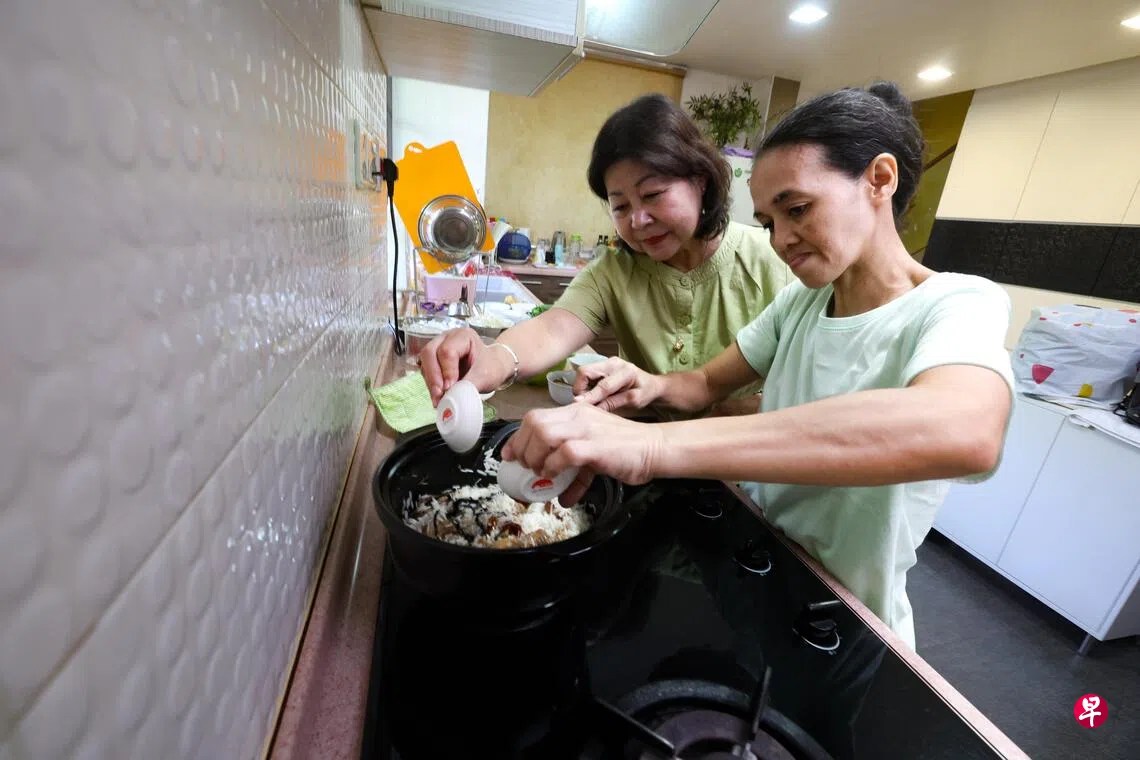
Annie Png (left), 69, said in an interview that she had attended other cooking classes before, but this was her first time taking her domestic helper Rodilyn (right) along to learn how to cook and understand nutritious ingredients. (Photo: Jeremy Kwan)
Rather than giving domestic helpers instructions at home on how to prepare healthy meals, why not take them to a cooking class? National Culinary Programme is a pilot jointly organised by NHG Polyclinics, the group’s Population Health division, migrant worker support organisation HealthServe and AMILI. It is aimed primarily at seniors aged over 60 and their domestic helpers, who learn together how to prepare healthy meals suitable for people with chronic conditions.
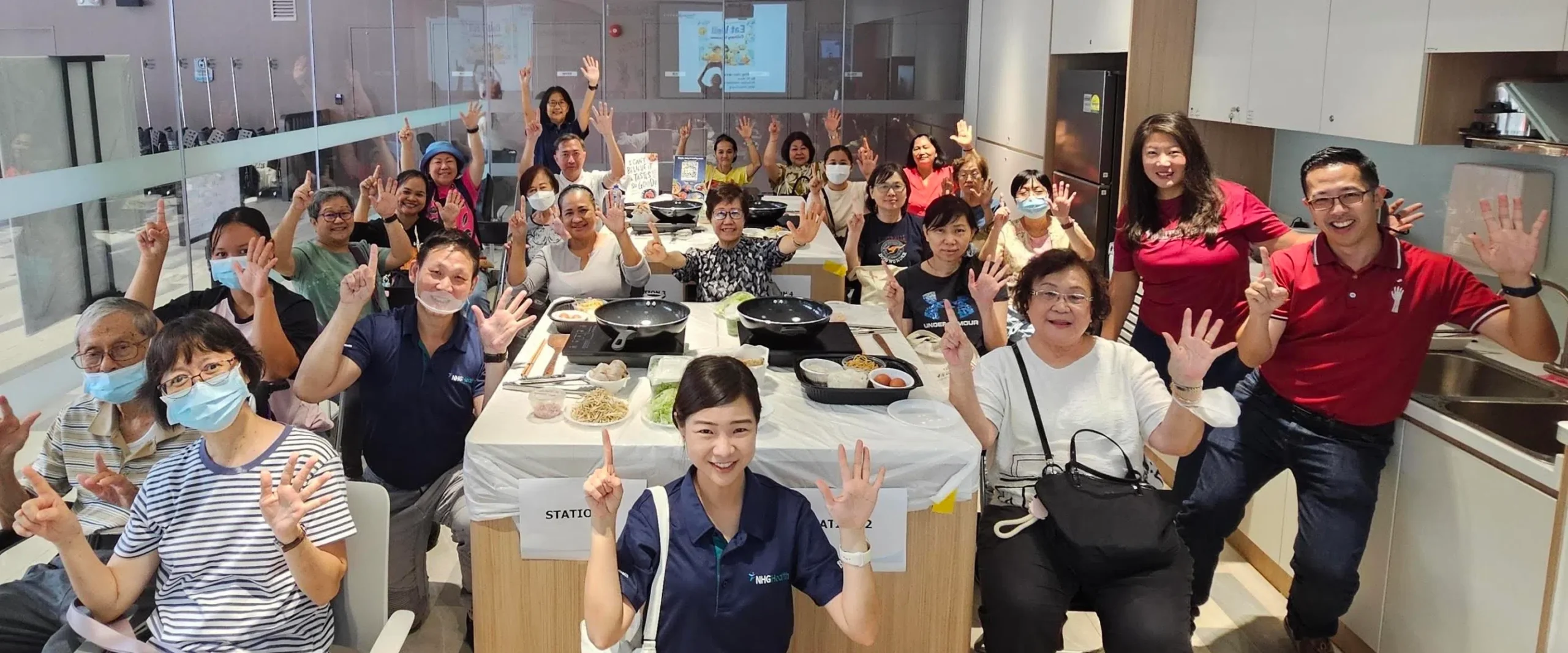
The organisers held two classes on 7 and 14 March this year, with a total of 18 participants comprising older employers and their foreign domestic helpers or caregivers.
Healthy food need not be bland: chicken rice and char kway teow can be healthy too
Won Tin Chiang, principal dietitian at NHG Polyclinics, said he had observed in his daily work that seniors and domestic helpers often lack a clear understanding of a balanced diet and how much of each food group to eat. Many also think healthy food is bland, complicated to prepare and expensive.
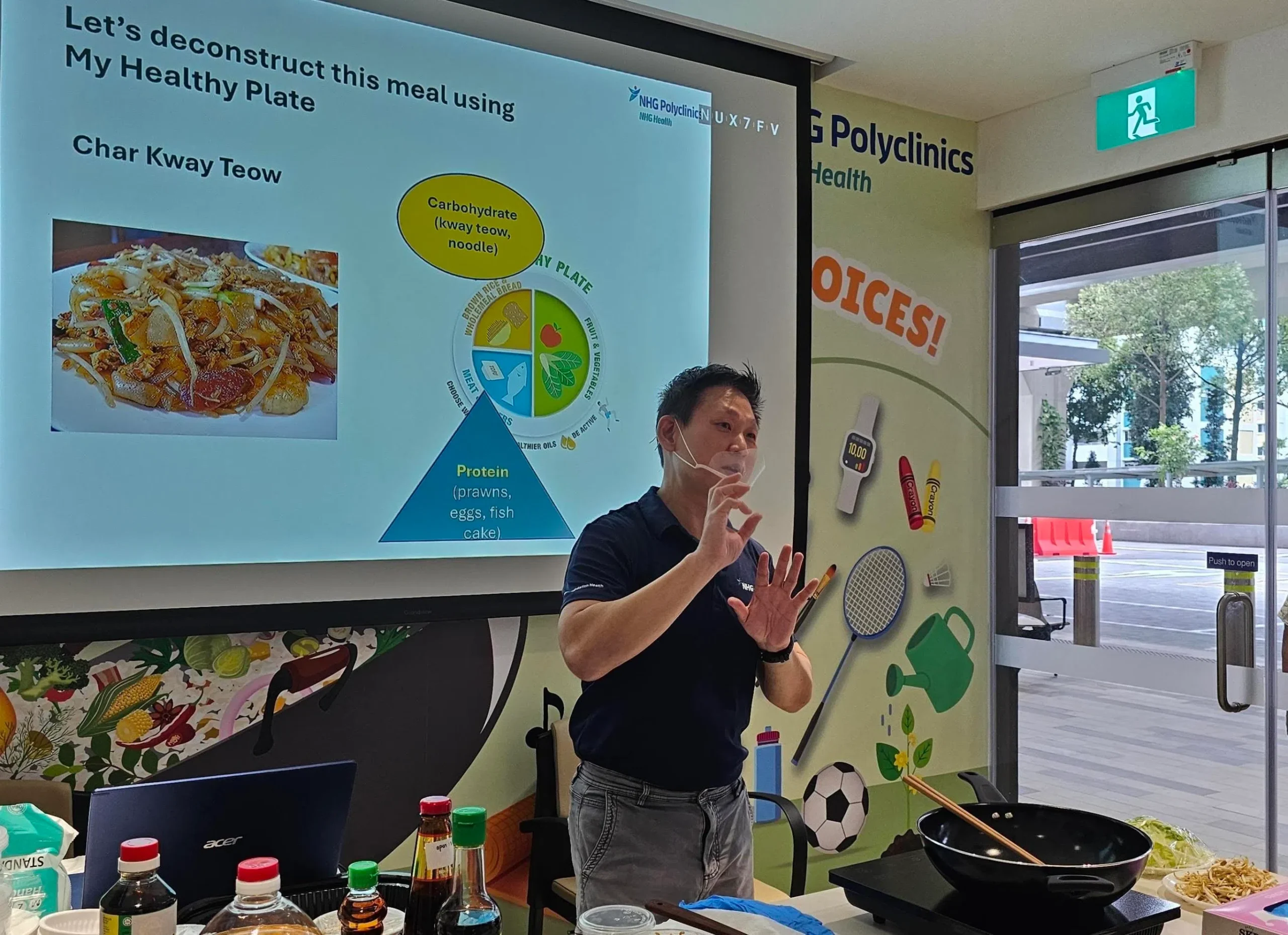
The pilot programme takes a hands-on approach. Participants first voted for the dishes they wanted to make from a selection of
<img src=” https: alt=”Employer Annie Png (right) and her Filipino domestic helper Rodilyn Bube attended the first Eat Well <a >
Older employer: helpers play a key role in healthy daily meals
Retiree Annie Png, 69, attended the classes with her Filipino domestic helper Rodilyn Bube, 46. Although she had taken cooking classes before, this was her first time attending one with her helper. She said in an interview that helpers, as the household’s cooks, play an important role in ensuring healthy meals throughout the day.
“Giving her verbal instructions and bringing her along to a class are completely different experiences. In class, they can watch the instructor demonstrate, then follow along step by step and try it themselves. That makes it easier for them to pick things up.”
After the March classes, the pair tried making various healthy meals at home using the recipes provided, including claypot rice and char kway teow. Png said: “I used to think that as long as we avoided deep-frying and just did some simple pan-frying or stir-frying, that was healthy enough. Only after attending the classes did I realise how much there is to learn even about buying ingredients. Some ingredients we often use are not actually the best or healthiest choices.”
She is also looking forward to the next round of classes, but hopes the organisers will offer a different set of recipes, such as nasi lemak and rendang, to explore how the sauces can be made healthier.
Rodilyn said she had learnt a great deal from the classes too. “Sometimes, when I forget how to make something, I look through the recipes for guidance. I hope there will be more opportunities to take part in activities like this with my employer.”
Retiree Ho Miu Leng, 76, and her Filipino domestic helper Jonalyn Calalo, 53, also attended the classes. Ho said she had always enjoyed eating healthily and avoided sugary drinks altogether.
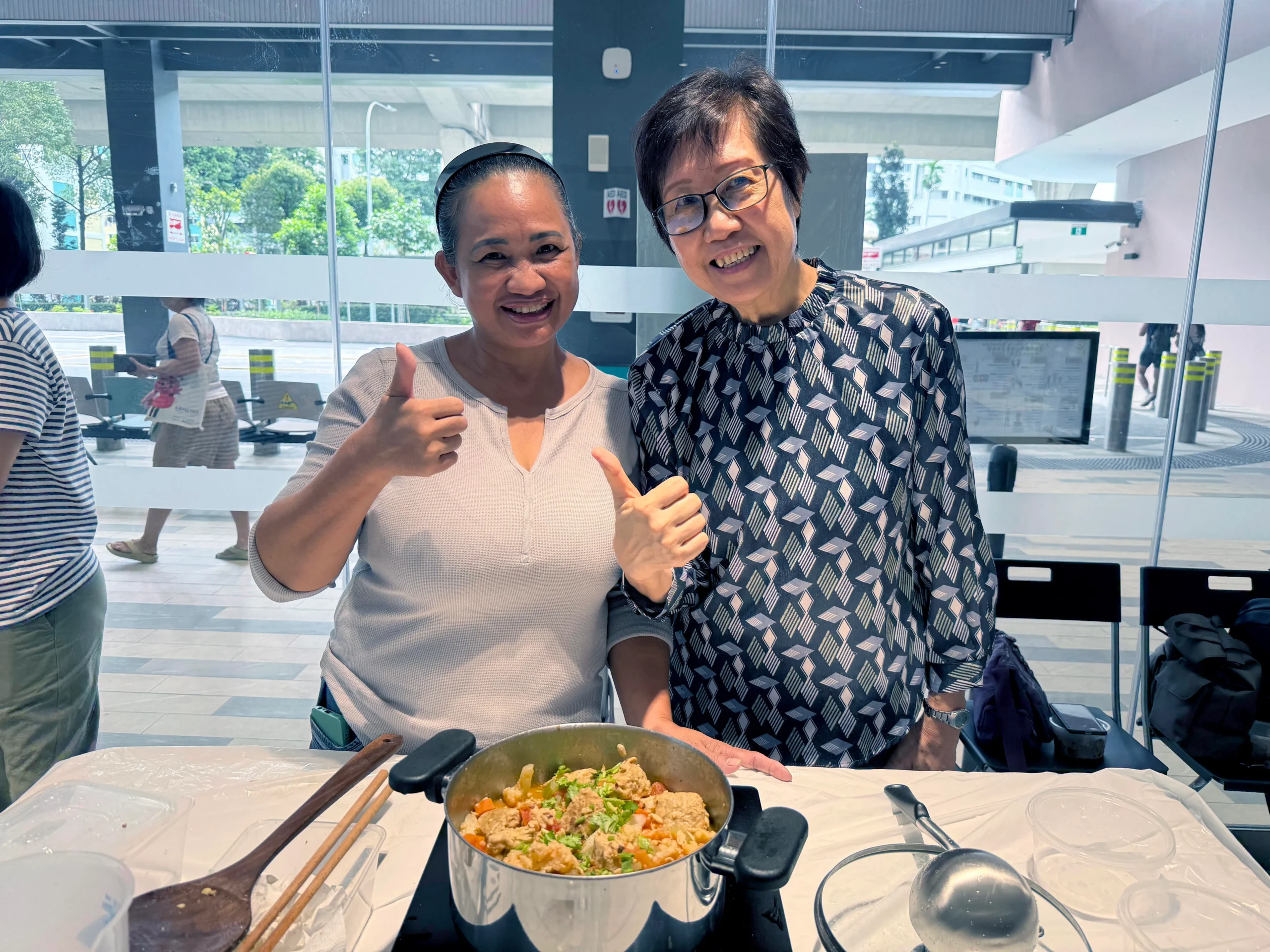
“Since attending the classes, I pay particular attention whenever I go to the supermarket. The classes introduced me to more healthy ingredients, making me more eager to seek out these foods.”
Jonalyn said she had also learnt to keep work surfaces clean while preparing meals and to handle ingredients properly. “I also pay attention to using ingredients in balanced amounts. Vegetables themselves can add flavour to a dish, so there is no need to add extra sugar. The natural sweetness of carrots and cabbage can help enhance the flavour.”
Dr Tan said further classes were being planned for the programme.
