

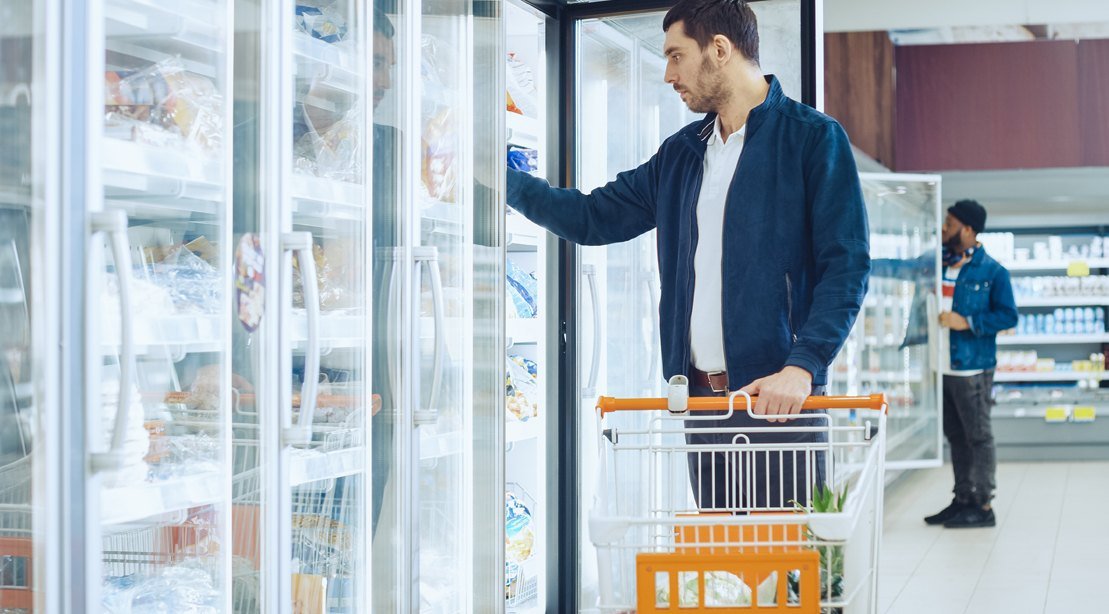
Frozen meals can be the hero of the day when you’re short on time and energy—or when you don’t feel like spending a bunch of time in the kitchen to get a meal on the table. Stocking your freezer with a few boxes can help you manage mealtime even during the most hectic times. Practical solutions for today’s busy man.
You can still find less healthy TV dinner classics like mac and cheese and Salisbury steak in the freezer aisle, but increasingly, you’ll see more options that are health-focused and revamped with fresher nutrition for convenience. And improvements in how they are made and the ingredients used can make some, dare-we-say, crave-worthy, instead of always feeling like a second-rate meal. Prison-like gruel, these are not.
To help you make the best choices possible, we’ve gathered some legit nutritious and protein-rich frozen meal options worth tossing in your cart.
How to Choose the Healthiest Frozen Meals
Selecting your quick-fix meal requires some label reading to figure out which ones are nutritionally better performers. It is important to keep in mind that not all frozen meals are even close to being created equal. Here are some criteria you can use to evaluate the nutrition. You can always toss in a handful of spinach or arugula, or add a secondary serving of cooked frozen vegetables like peppers, broccoli, or green peas.
Sodium: Manufacturers often make use of salt and other sodium-containing ingredients for preservation purposes and to enhance flavor and improve the texture in frozen meals. Ideally, a frozen meal would have 800 mg or less, but many still have more than this. If that is the case, just be sure to go easy on your sodium intake elsewhere in your diet.
Sugar: Look for frozen meals that are not wrapped up in high amounts of added sugars. Remember, there is a big difference between naturally occurring sugars found in items like vegetables and those added during manufacturing. Glazed proteins and sweet sauces such as barbecue and teriyaki can drive up the added sugar numbers. Ideally, look for meals that list no more than 5g of added sugar on the nutrition panel.
Grains: Still to this day, many frozen meals rely on refined grains like regular pasta and white rice rather than more nutrient-dense whole grains. It’s not a deal breaker if your subzero noodles are made with white flour, but it’s a smart move to try to find meals made with whole grains like brown rice or quinoa for a bigger nutrient and fiber windfall. A
<h2><strong>
