

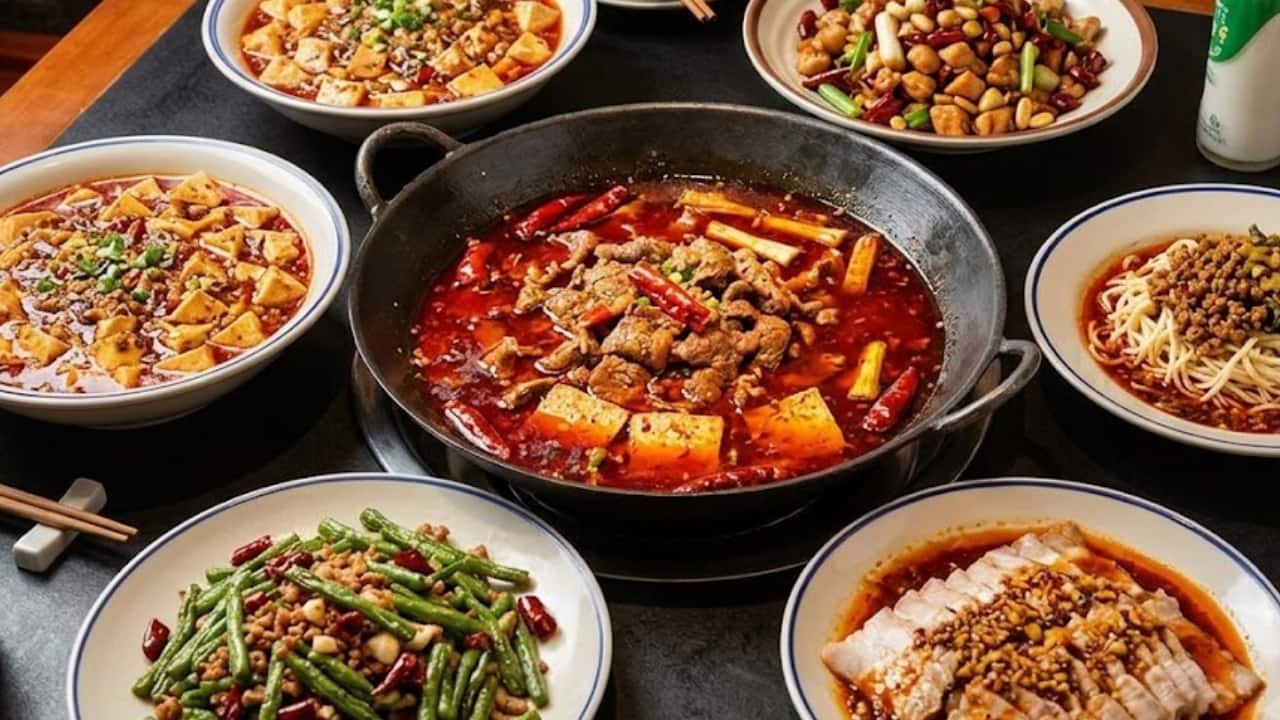
powered cooking machines in China can learn a chef’s technique, add flavours. (AI-generated representative image)
The next plate of freshly stir-fried Sichuan food you order in China may not have been cooked by a chef at all. Restaurants in southwest China are increasingly experimenting with automated cooking machines that can prepare Chinese dishes from start to finish, and diners seem surprisingly happy with the results.
Recent footage from Sichuan shows automated woks adding ingredients, stirring and seasoning food without a chef standing over the stove. One diner who tried the robot-prepared food described it as “not bad” and “quite home-style”, adding that it suited local tastes.
The machines come from Sichuan Black Pineapple Smart Kitchen Technology, a Chengdu-based company developing automated equipment for Chinese restaurant kitchens. Its founder, Zheng Haotian, says the latest machines use “self-learning” AI to record how an experienced chef cooks and then reproduce those techniques.
Rather than simply following a fixed recipe, the system can record a chef’s operating habits and convert them into a digital recipe. The company says its equipment can dispense seasonings with accuracy of about plus or minus 0.1 gram and automatically control heat and stir-frying.
Once programmed, the process requires remarkably little human intervention. Press a button and the robot can add the ingredients, cook the dish, plate it and clean its own wok before the next order.
One of the challenges has been reproducing wok hei, or “wok breath”, the distinctive flavour created by extremely high-temperature Chinesestir-frying. The company’s machines can reportedly reach temperatures of up to 350 degrees Celsius and vary the heat depending on the dish, while performing rapid stirring movements intended to mimic an experienced cook.
The technology is already moving beyond demonstrations. The company says its cooking robots are being used by fast-food chains, independent restaurants, canteens and other food businesses. It says it has shipped around 6,000 units in 2026 to customers across 14 countries and regions.
Other restaurants in Chengdu are also adopting automated cooking. One restaurant using smart cooking equipment reported that it could operate six or seven woks with only two kitchen workers, compared with six or seven cooks
previously, while increasing the rate at which dishes were produced by more than 40 percent.
For diners, though, the test is much simpler. A robot can be precise, fast and consistent, but Chinese cooking is famously dependent on timing, heat and the cook’s instincts. If customers can eat the finished dish and still describe it as tasting like something made at home, these robot chefs may have cleared their most difficult hurdle.
MC World Desk
first published: Oct 3, 2026 04:06 pm
Discover the latest Business News, Sensex, and Nifty updates. Obtain Personal Finance insights, tax queries, and expert opinions on Moneycontrol or download the Moneycontrol App to stay updated!
Watch
Trending news

Female AI assistants paid 10% less than male ones for the same work, `);
}
if(res.stay_updated){
$(“.stay-updated-ajax”).html(res.stay_updated);
}
}catch(e){ console.log(e); }
});
},2000); // Reduced from 8s to 2s for better Core Web Vitals (LCP/UX)
});
