

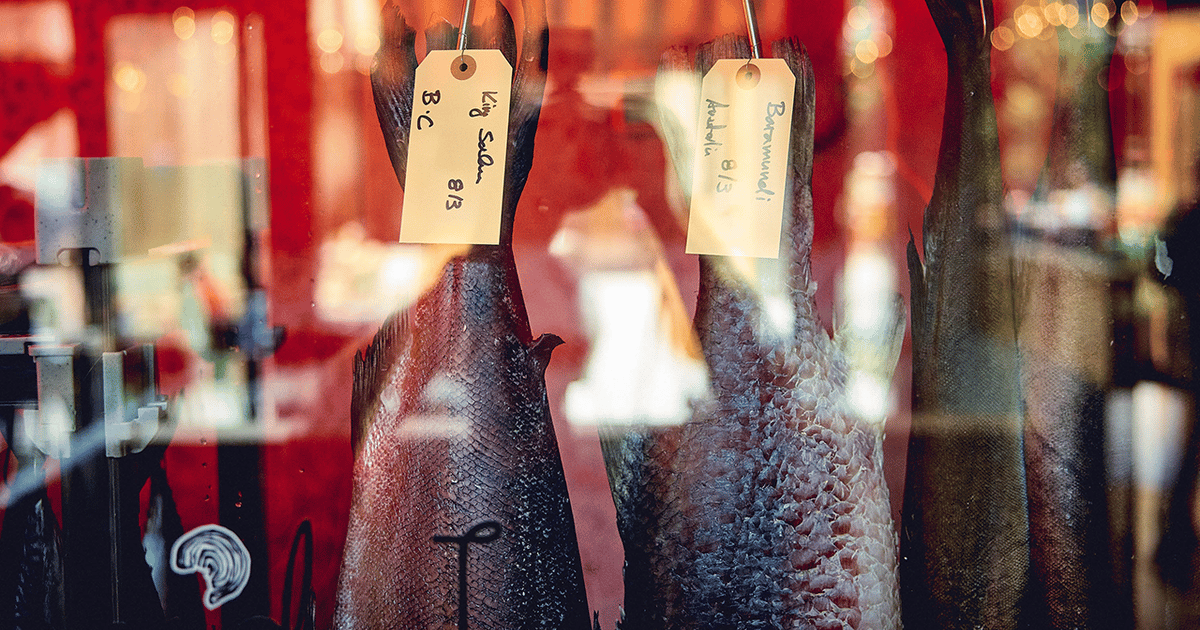
At Sea’d In in Seattle, where Chef Heong Soon Park cooks over an open wood-fired hearth, diners are welcomed into the walk-in chambers where he ages fish. Courtesy of Sea’d In
Humans have been dry-aging fish for centuries, but some <a s typically done in a climate-controlled environment over a few days to a few weeks, depending on the type of fish. In the simplest terms, the process reduces the fish’s moisture level, increases umami, and reduces the “fishy” smell and taste.
Today, diners have more opportunities to learn about and try dry-aged fish at restaurants across the country, but it may take time before this preparation style is widely known and adopted.
Part of the problem is its name, said Liwei Liao, founder and owner of Joint Seafood in Los Angeles. “The term really is terrible,” he said. (As the self-appointed “dry-aged fish guy,” he’s allowed to say that.) “The first two words of that are something that people usually don’t want to associate fish with, right? You don’t want dry fish or aged fish.”
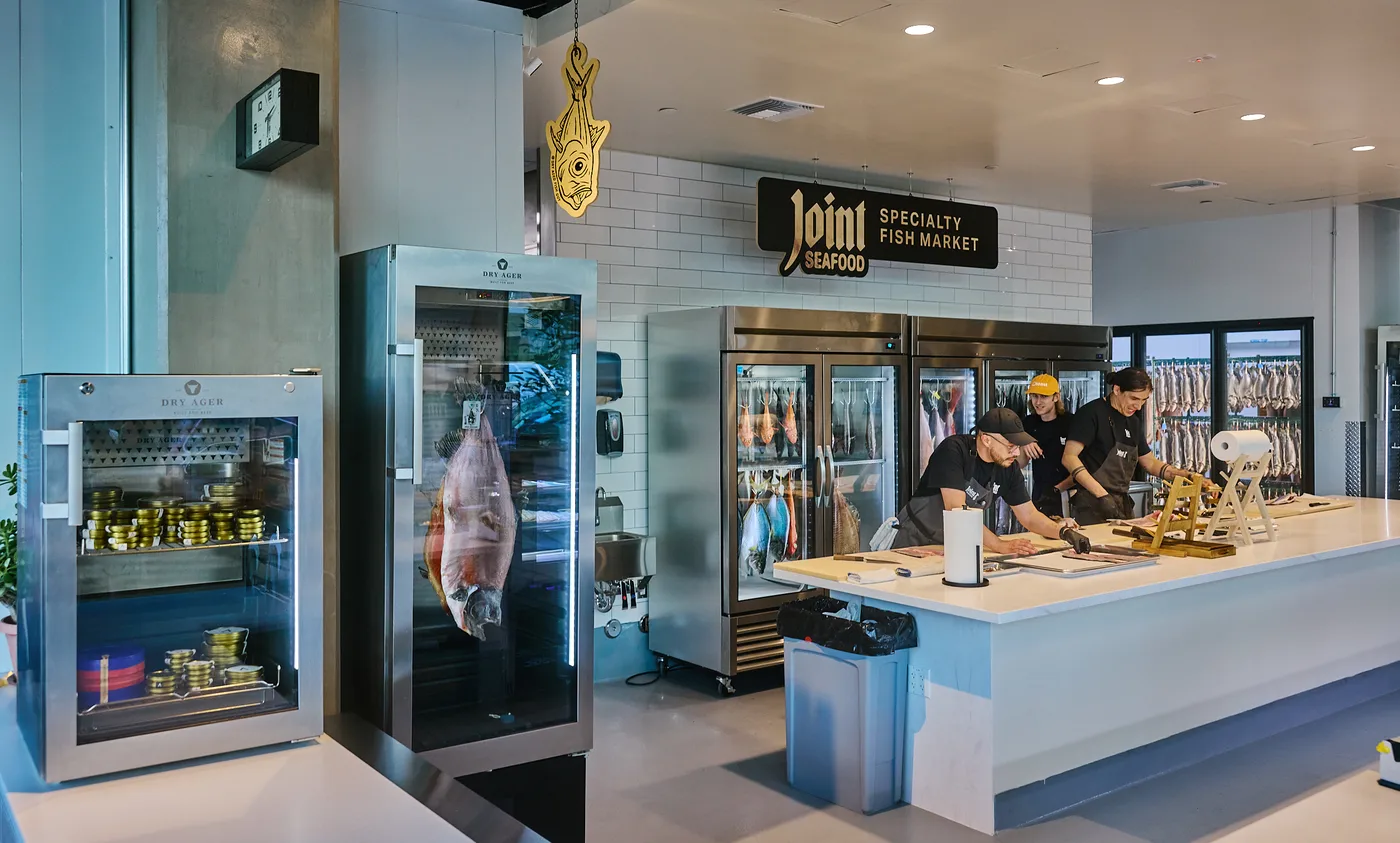
Joint Seafood’s new space in Los Angeles. | Photo by Evan Robinson
For Liao, dry-aged fish is far from a trend. He opened the first Joint location, a market, cafe, and sushi counter, in 2018, and he recently opened a second 4,000-square-foot space also in Los Angeles. The spaces help tell the story of dry-aged fish. Rows of cold cases display the fish and spark conversation.
Conversation and philosophy behind the anchovy. Fresh anchovies are not good. After the anchovy is dry, you can use it on any dish.”
At Sea’d In in Seattle, where Chef Heong Soon Park cooks over an open wood-fired hearth, diners are welcomed into the walk-in chambers where he ages fish. They are often surprised by the smell, or lack of smell, he said.
“The whole restaurant is a part of the experience,” Park said. “We have an open kitchen, so they can walk around, come to our chefs. They can ask a question.”
But ultimately, the chefs said, tasting is believing. “For the average consumer, their reaction is gonna be like, ‘Hey, wow! It’s really fresh. It’s really clean. It’s the best fish I’ve tasted,” Liao said.
Through Joint Seafood’s wholesale arm of the business, Liao helps other restaurants in Los Angeles put dry-aged fish on the menu and helps spread his motto — ‘Fresh is Boring.’ But, in general, several factors hold back dry-aged fish’s growth. Prices are high. Sourcing is hard. And once chefs get the fish, those dry-aging cabinets are expensive to build and maintain.
It’s a complicated and costly way to produce food. Those factors combined with diner’s perception will likely limited dry-aged fish’s menu growth, Liz Moskow, a restaurant industry expert and principal of the food consultancy Bread & Circus, said. Chefs and restaurants that want to entice customers unfamiliar or hesitant to try dry-aged fish should lean into flavor and “create new language around the process,” she said.
“It’s definitely, in my opinion, going to be something that stays at those chef-led, chef-driven, high-end fine dining places,” she said.
But the exclusiveness, not to mention the whole experience, of dry-aged fish might help those restaurants with the rekely any diner would think, ‘I could make this at home.’
